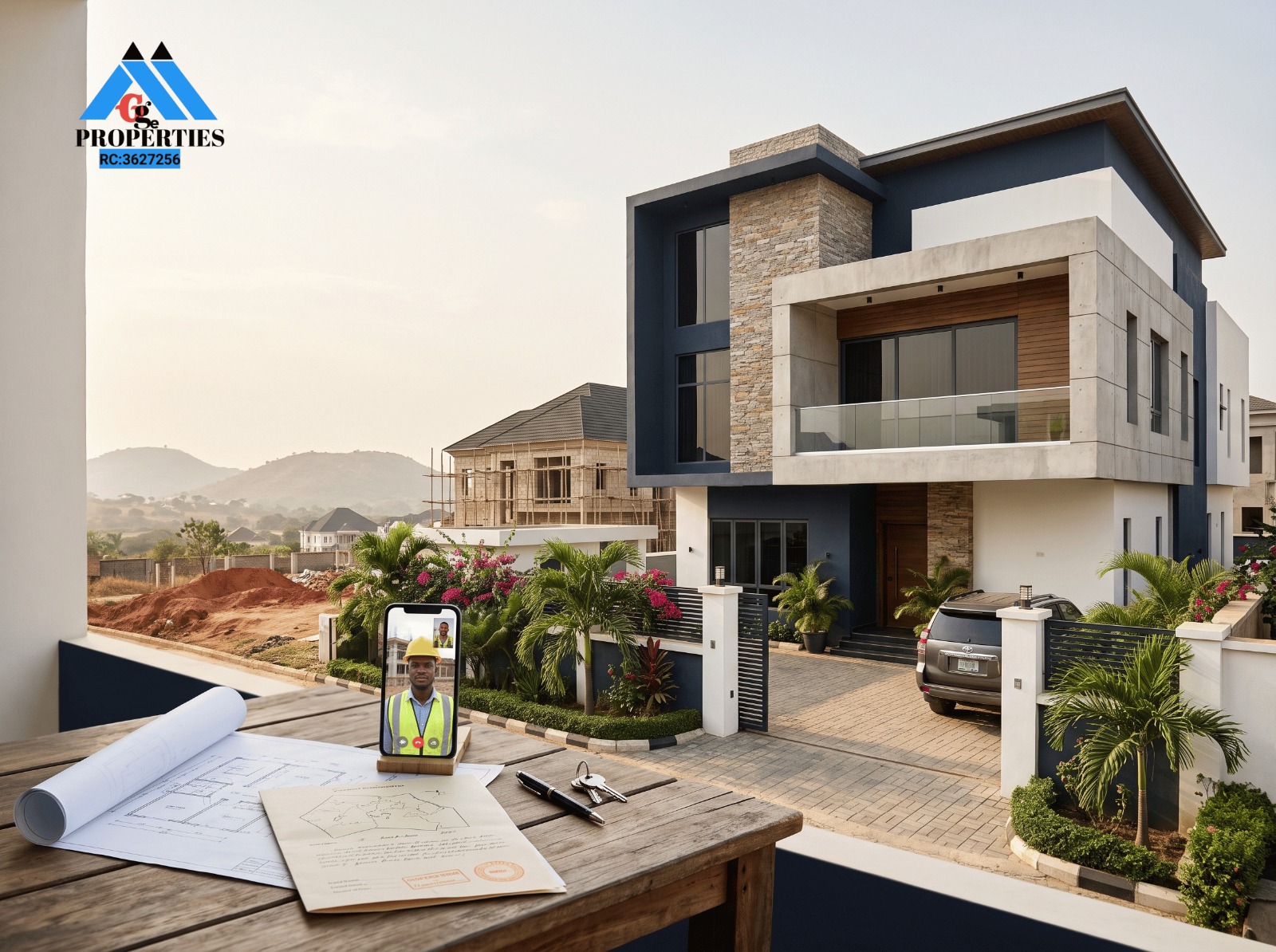

Every year, Nigerians living in the United Kingdom, the United States, Canada, Europe, and across the globe remit billions of dollars back home, a significant portion of which is earmarked for homeownership, commercial development, and long-term land banking. Yet, for many in the diaspora, the dream of establishing a physical footprint in Nigeria is overshadowed by systemic challenges: fraudulent land sales, unperfected titles, diverted remittances, substandard artisan craftsmanship, and the emotional and financial strain of relying on informal intermediaries.
Building or buying property from thousands of miles away does not have to be an exercise in anxiety. By transitioning from informal, trust-based arrangements to institutional frameworks, legal due diligence, and milestone-based project management, diaspora investors can safely acquire land and deliver construction projects in Lagos, Abuja, and other commercial hubs.
1. Phase One: Safe Land Acquisition
The foundation of every secure property project is a legally sound, unencumbered land title. Distance often causes buyers to rely on photographs or verbal assurances from sellers, which is where title fraud thrives.
Retain an Independent Property Solicitor
Never use the seller’s lawyer or a generalist legal practitioner recommended by an intermediary. Retain an independent real-estate solicitor registered with the Nigerian Bar Association (NBA) whose sole responsibility is protecting your interests. Your solicitor must conduct a formal search at the relevant land registry:
- Lagos: The Land Registry Directorate at the Lands Bureau, Alausa, Ikeja.
- Abuja: The Abuja Geographic Information Systems (AGIS).
- Other States: Respective State Ministries of Lands and Urban Development.
This search confirms whether the seller is the verified registered owner, whether the title is subject to a mortgage, lien, or court litigation, and whether the document registered is genuine.
Conduct Cadastral Charting and Coordinate Verification
A piece of land may have an authentic-looking deed, but the coordinates on the ground might fall within a designated government acquisition or road expansion corridor.
- Commission a registered surveyor to take physical GPS coordinates of the parcel.
- Cross-reference these coordinates through the Office of the State Surveyor-General (a process known as “charting”).
- Confirm whether the land is free from committed government acquisition, agricultural reserves, or ecological buffer zones.
Understand the Title Hierarchy
Do not commit capital to properties marketed with ambiguous legal jargon such as “title in process” or “gazette file number.” Require verifiable proof of title:
| Title Type | Legal Status & Security Level | Due Diligence Requirement |
| Certificate of Occupancy (C of O) | High. First title issued by the state government for a 99-year lease. | Verify authenticity and boundary coordinates at the State Land Registry. |
| Governor’s Consent | High. Legal validation required whenever a property with a C of O is subsequently sold. | Confirm the signature of the governor or authorized commissioner at the registry. |
| Excision / Gazette | Moderate. Portion of land released from government acquisition to an indigenous community. | Confirm the specific coordinates fall cleanly inside the excised polygon published in the gazette. |
| Receipt / Survey Only | Extremely High Risk. Does not confer ownership against third parties or government acquisition. | Avoid purchase unless ready to undertake full perfection and excision processing yourself. |
2. Moving Past the “Trusted Relative” Syndrome
One of the most persistent failure points for diaspora real estate projects is delegating project oversight, material purchasing, or financial custody to family members, childhood friends, or informal acquaintances.
While driven by good intentions, these arrangements introduce critical vulnerabilities:
- Absence of Technical Expertise: Relatives rarely possess the quantity surveying, architectural, or structural engineering knowledge required to evaluate site concrete mixes, structural rebar gauges, or MEP rough-ins.
- Fund Leakage and Diversion: Because there are no binding commercial contracts, funds earmarked for foundation casting or roofing timber are frequently diverted to private personal emergencies.
- Lack of Legal Redress: Taking legal action against a family member who has squandered project capital is emotionally disruptive and rarely leads to asset recovery.
Treat your Nigerian property venture as a formal capital investment. Engage established, corporate real-estate developers and building contractors who offer corporate guarantees, clear corporate identity (CAC registration), audited professional standing, and contractual liability.
3. Phase Two: Pre-Construction Legalities and Planning
Breaking ground before completing proper engineering and statutory approvals exposes a project to demolition by urban planning authorities (such as LASPPPA in Lagos or FCDA in Abuja) and severe structural failure.
Land Acquisition → Soil Investigation → Architectural/Structural Design → Statutory Approvals → BOQ Preparation
Commission Comprehensive Soil Investigation
Before finalizing your foundation design, engage a geotechnical firm to conduct a soil test. This is mandatory across coastal Lagos (Lekki, Ajah, Epe) and areas with high water tables or heavy clay soils. A soil test determines whether the site requires a simple strip foundation, a reinforced raft foundation, or deep piling, preventing catastrophic settlement and structural cracks.
Secure Statutory Building Approvals
Ensure your architectural, structural, mechanical, and electrical drawings are prepared by registered professionals (ARCON, COREN) and formally submitted to state planning agencies for approval. Never start building based on a “temporary permit” or informal assurances from site monitors; an unapproved building risks stop-work orders, compounding fines, and eventual structural forfeiture.
Demand a Registered Bill of Quantities (BOQ)
Never accept informal “rough estimates” or lump-sum verbal quotes from artisans. A detailed Bill of Quantities, drafted by a registered Quantity Surveyor (NIQS), itemizes the exact quantity, grade, and market cost of every input—from bags of cement and metric tons of rebar to plumbing fittings and electrical conduits. A BOQ protects you from arbitrary price inflation throughout the building cycle.
4. Phase Three: Remote Construction Management
Managing construction from abroad requires a clear operational framework that replaces physical presence with transparent milestones and independent technical verification.
1. Implement Milestone-Based Stage Payments
Never disburse capital upfront for entire construction phases. Divide the project into distinct, verifiable construction milestones:
- Substructure (Foundation): Site clearing, excavation, damp-proof coursing, and ground slab casting.
- Superstructure: Columns, beams, blockwork, and suspended slab (first-floor decking).
- Roofing & Carcass: Roof framing, coverings, lintels, and external plastering.
- First-Fix MEP: Electrical conduits, pipework, and mechanical channeling.
- Finishing & Fixtures: Tiling, doors, glazing, sanitary fixtures, joinery, and painting.
Each disbursement must be released only after the contractor meets the predefined milestone and provides documented structural proof.
2. Retain an Independent Project Quantity Surveyor
To audit the work of the main building contractor, contract an independent Quantity Surveyor or project manager who reports directly to you. Before releasing funds for Milestone 2, this independent expert visits the site, verifies that Milestone 1 was executed to the required technical specifications, validates material receipts, and signs off on the disbursement request.
3. Deploy Modern Digital Site Monitoring
Technology has made remote oversight straightforward. Require the following in your construction contract:
- Time-Stamped Video Inspections: Regular high-definition walk-throughs recorded at concrete pours, steel tying, and structural framing.
- Geotagged Drone Imagery: High-resolution aerial photography showing perimeter boundaries, roof decking, and structural alignment.
- On-Site CCTV Surveillance: Solar-powered, cellular-connected cameras installed at key perimeter points to monitor material deliveries, artisan attendance, and site inventory in real time via an app.
5. Contractual Protections and Corporate Accountability
To protect your capital against timeline inflation and project abandonment, all commercial arrangements must be governed by an enforceable, formal building contract.
Ensure your Formal Construction Agreement clearly defines:
- Detailed Scope of Works: Directly aligned with the approved drawings and the Bill of Quantities.
- Firm Delivery Timelines: Projected completion dates with pre-agreed grace periods.
- Liquidated Damages Clause: A defined financial penalty deducted from final payments for unexcused project delays caused by the contractor.
- Material Specification Standards: Explicit requirements for concrete strength grades (e.g., C25/30), rebar origin (local vs. high-yield imported), electrical cable brands, and pipe schedules.
- Defect Liability Period (DLP): A contractual retention period (typically 6 to 12 months post-handover) where the contractor retains 5%–10% of project fees, payable only after correcting any hidden plumbing, electrical, or structural defects that emerge.
Investing with Confidence
Building a private residential sanctuary, acquiring titled land, or developing income-producing commercial real estate in Nigeria is one of the most effective ways to preserve wealth, anchor your family’s future, and generate long-term yield. The distance between your current location and Nigeria should not be an impediment to building safely.
By replacing informal arrangements with rigorous legal due diligence, independent verification, and professional corporate contractors, you ensure that every dollar or pound sent home transforms into genuine, enduring real estate value.
To review verified property listings with vetted titles, explore structured joint-venture developments, or discuss professional construction management tailored for diaspora investors, get in touch with the team at GGE Properties.